

“If nobody wants to see your movie, there’s nothing you can do to stop them.”
My first boss used to say that a lot. If someone has no interest in your product or service, there is nothing you can do to make them interested. I still think about this idea when we talk about veterinary marketing.
Veterinary practices are navigating changes in visit patterns, including declining wellness visits, and shifts in pet adoption and replacement rates. Because of this, many of the clinic owners we talk to at Vetcelerator come to us with the same goal: more appointments and new clients.
Getting more appointments through marketing isn’t going to work with pet owners who aren’t interested. If done correctly, though, marketing will reach pet owners who are interested. Once those pet owners are reached, the next step is making it easy to take action.
Creating a Clear Path to an Appointment at Your Veterinary Clinic
When a pet owner is ready to choose a veterinary practice, your website and advertising should make it easy for them move confidently from interest to an appointment. Any points of friction may cause them to look elsewhere. Some sources of friction to look out for are:

Limited or No Online Scheduling Option
Unclear Service Information
Pricing That Is Difficult to Find or Understand
Non-Existent or Oddly Placed Calls to Action
Phone Number Is Hard to Find
Works Well on Desktop, but Not Great on Mobile
Pop-ups, Which Interrupt the User’s Path to Booking
That brings me back to my old boss’s line. For veterinary practices, I’d adapt it to: “When somebody wants to see your movie, make it easy for them to buy a ticket.”
Removing Scheduling Friction for Pet Owners
As marketing experts, our team at Vetcelerator has been closely studying where the market is headed through modern veterinary websites in the age of AI Overviews, the current Google ads space, and changing consumer behavior.
One term has become central to how we talk about this work: conversion-focused. Conversion-focused marketing gives interested pet owners a clear path from finding your practice to scheduling care. Every part of that experience, like your website, ads, phone number, service information, pricing, and scheduling options, support that next step.
We’re featuring two deep-dive articles that explore how veterinary practices can reduce friction across their digital presence and make it easier for pet owners to find and book with them.

Featured Article 1: Conversion-Focused Websites
Your website’s primary goal is to turn interested visitors into scheduled appointments. Website traffic creates opportunity. A conversion-focused website capitalizes on that opportunity by providing pet owners with everything they need to take the next step.
In this article, we break down how to create a clearer path to booking, aka “getting a ticket”. The following are a few of the key takeaways.
1. Mobile-First, Always

With mobile devices driving an estimated 72% of veterinary website traffic, a “clunky on mobile” experience is a death sentence for conversions.
2. Say Yes to Online Scheduling

Yes, clinic workflows are complex, but a Mayo Clinic study showed that 30% of self-scheduled wellness appointments are made outside of business hours. If you don’t let pet owners book at 10 PM, they will find a clinic that does.
3. The Three Audiences

Your website doesn’t just talk to pet owners anymore. It must communicate with three distinct groups: pet owners, search engines, and AI systems (such as ChatGPT, Claude, and Google AI Overviews). Knowing how and where to talk to these distinct audiences on your website matters.
4. Demystifying Pricing
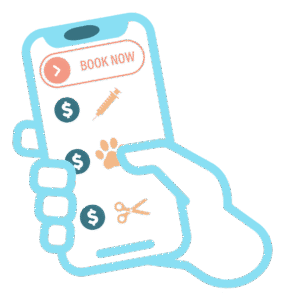
One of the biggest friction points is price opaqueness. Publishing starting prices for standardized services (like basic exams, vaccinations, and wellness plans) acts as an incredible trust-builder. Use a disclaimer that these are “starting” prices and save the customized estimates for complex treatments.
Featured Article 2: Conversion-Focused Ads
Getting clicks on Google Ads is fine; getting the right pet owners to click is where the magic happens. Conversion-focused advertising moves away from vanity metrics (like impressions) and focuses entirely on measurable actions. Here are some ways we use data and machine learning to make every ad dollar work harder.
1. Smarter Bidding with Machine Learning
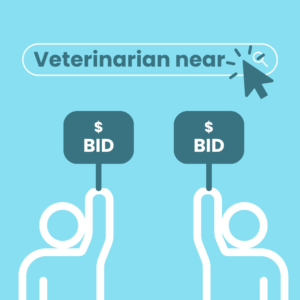
When you give Google Ads clear, reliable conversion data, its machine learning systems identify patterns (like Monday morning searches frequently lead to bookings) and automatically adjust bidding to target high-value clients. Poor data, however, teaches the system to optimize for the wrong actions.
2. Refining Your Call Tracking

Not all calls are created equal. Standard call conversions track clicks, but by setting your call duration thresholds properly (60 seconds for direct clicks or 180 seconds if you use a call tree/IVR), you ensure Google is only optimizing for callers who actually reach your front desk.
3. Connecting the Data Ecosystem

To see the full path from reach → lead → appointment → revenue, your ad account must communicate with Google Analytics, your Google Business Profile (vital since over 90% of ad clicks happen on mobile), and your PIMS (practice information management system). This first-party PIMS data is gold, allowing you to exclude active clients from client-acquisition campaigns or specifically target lapsed clients.
Get More Appointments on the Books for Your Veterinary Practice
Go back to the movie idea and look at your practice from the pet owner’s perspective. You’re interested. You want to “get the movie ticket.” Pull up the clinic’s website on your phone. Can you find a phone number immediately? Can you schedule online? Can you quickly understand the services offered? Is the next step clear? If not, let’s fix it.
If you want to talk about upgrading your website, optimizing your Google Ads, or building a conversion-focused digital presence, reach out to our team! As always, we are proud to be your partner in practice profitability.

This article was written by Vetcelerator President, Drew Bartholomew.