

AI is everywhere; some people love it, some fear it, and some are still trying to figure out why their phone wants to summarize every email they receive. For veterinary practices, AI brings opportunities, along with risks. Where can AI help your clinic grow? Where does human oversight still matter? In this Vetcelerator article, we’ll review the dark side of AI content marketing for veterinary practices.
Is AI Good or Bad?
First, we need to distinguish between AI used by a veterinary practice and AI used by a pet owner looking for a service; these are two very different use cases.
For a pet owner, AI can influence how they find your clinic, compare local practices, research pricing, and receive recommendations based on reviews and services offered. AI is becoming a helpful tool for researching veterinary care and deciding which clinic to contact.
For veterinary businesses, AI can feel like a marketing cheat code because you can generate full pages of content and images with a simple prompt like, “Build my veterinary clinic a 30-day content and SEO plan with blogs and social media content.” You can easily spice it up by telling it how many words you want each piece to be and to add cat-themed puns throughout. In a matter of seconds, you have months’ worth of content, paw-related puns, and probably lots of emoji-filled content.

So that’s good, right?
There’s an important saying: you get what you pay for. If you’re using a prompt on a free or cheap tool, consider the quality of the results. Ask yourself these questions:
- How many other people are using the same or similar prompts and generating the same results?
- What will separate AI-generated content created for my veterinary practice from my competitors?
- How closely am I reviewing and trusting the generative results?
- Does the content reflect my practice’s brand?
AI can generate an impressive amount of content in very little time, but volume and quality aren’t the same thing.
The Bad Side of Veterinary AI Content Marketing
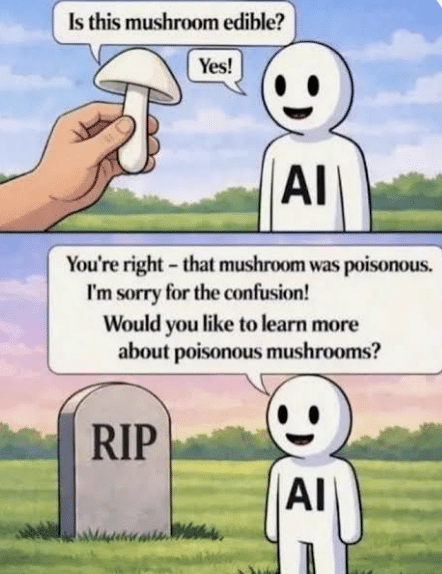
You have probably seen this meme: “Is this mushroom edible?”
Yes, the mushroom was edible; sadly, it was also poisonous. This meme makes an important point: just because AI provided an answer confidently, it doesn’t mean that answer is correct. Taking AI-generated information as “facts” can be very dangerous, especially when discussing animal health. AI can generate incorrect information, misinterpret facts, or completely invent data. These errors are known as AI hallucinations.
Think of a hallucination as AI deciding to get creative. The tricky part is that the incorrect information can sound just as convincing as the correct information.

Vetcelerator Tip: Ask AI to cite its sources, then actually check them. AI-generated citations can be incorrect, completely fabricated, or from an unreliable source. A confident answer isn’t a substitute for a credible source.
Edible mushrooms are a pretty extreme example, so let’s look at some actual examples we’ve seen at Vetcelerator of non-ideal generative content that was presented to us for content marketing.
Example One: AI-Generated Images
Vetcelerator hosts and manages websites for numerous veterinary clinics. When asked by our clients, we have integrated some third-party tools into their veterinary clinic’s website. Some of these tools are widgets that encourage online bookings; others go further, such as posting blogs.
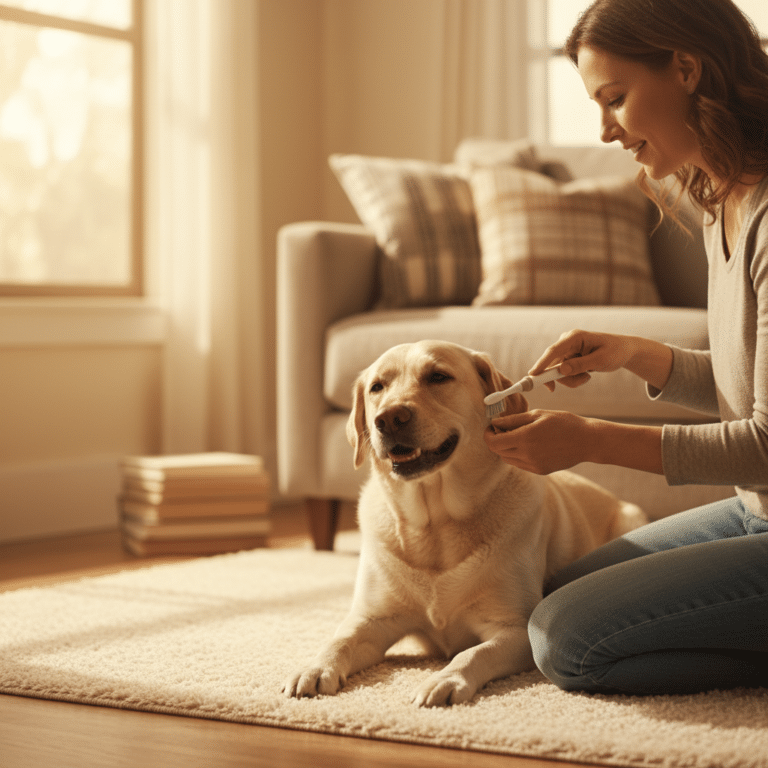
In this example, we had integrated a third-party software that showed fully AI-generated blogs. These blogs included AI images, among which were images such as a woman grooming her dog’s ears with a toothbrush for a dental blog. It’s the kind of mistake that might make someone laugh, but this kind of image also affects your veterinary clinic’s credibility.
Your website represents your practice’s expertise. When the images or information don’t make sense, pet parents may begin to question how much attention goes into the rest of your care.
Example 2: AI-Generated Content
Another example is from our veterinary clinic clients who themselves use an AI platform, like ChatGPT or Claude, to write blogs about topics they think are important. This is a worthy instinct to educate pet owners. However, we’ve seen several cases where generative content poorly illustrates or fully makes up situations to support a topical area.
The problem is that AI tends to aim to please and “bend the truth,” and we’ve seen multiple cases where generative content invents statistics and misrepresents a solution.

For example, the blog is about the summer as mosquito season, so AI generates information like, “Heartworm infections are on the rise in this state over the past few years.” Sounds like a great fact to spur pet owners to keep their cats and dogs on heartworm prevention. The problem was, for this specific example, actual data did not support that claim. We’ve also seen AI-generated content suggesting natural remedies as cures for health conditions without credible supporting evidence.
These examples create real concerns for veterinary practices.
Pet owners look to veterinary professionals for reliable, informed guidance. Publishing unsupported health claims damages your reputation and contributes to misinformation. And because the content appears on your website, it’s your practice’s credibility on the line.
Vetcelerator Tip: Treat AI-generated veterinary content as a first draft. Have someone with the appropriate expertise review medical claims, statistics, recommendations, and images before anything goes live.
AI Only Knows What You Tell It
AI doesn’t automatically understand your business. You may ask it to create a marketing plan for your clinic, and it can give you a very impressive-looking list of recommendations, but does the AI chatbot you are asking know your goals, who your ideal customers are, that your clinic is a mixed animal practice, or that a major corporate competitor just opened down the street? Unless you provide AI with all the details, it’s going to work with the information it has. Without the right context, it can produce generic recommendations that sound nice but don’t necessarily support your goals.
Your Practice Should Have a Distinct Brand
Your veterinary brand is built on trust. Every blog, social media post, website image, flyer, and advertisement contributes to your brand’s identity and authenticity. Veterinary clinics should try to establish a distinct local presence. Generic content makes it harder to communicate what makes your practice special.
When clinics rely too heavily on AI-generated content, especially content without human oversight, the marketing can start to look and sound like everyone else’s. The same stock-style images and the same predictable captions filled with paw puns and emojis.
Vetcelerator Tip: Your practice has its own people, personality, expertise, and approach to care. Your marketing should reflect that.
The Bright Side of AI and Veterinary Clinics
So AI is a completely bad idea for content marketing? No. There are several great things about AI and its influence on veterinary clinics.
Pet owners can use AI-powered tools to get recommendations, compare nearby clinics, and research services through conversational searches. Veterinary clinic owners can use AI to put together a blog on a topic they feel strongly about, provided that blog is then fact-checked. A strong digital presence, accurate business information, relevant website content, and positive client reviews help AI-powered search tools understand your practice and its services. This is all opportunities for your veterinary practice to be discovered.
Visibility gets you considered. A conversion-focused website turns that interest into appointments.

Optimizing for AI can help your clinic attract more patients. This means your website needs to be conversion-focused so that when AI recommends your practice, it’s easy to take the next step to book an appointment. AI workflows can eliminate human error and allow for 24/7 booking.
Vetcelerator believes technology should support the people behind your practice, which means creating content that reflects your clinic’s authentic voice, answers real questions from pet owners, and is structured for search engines and AI-powered tools so your business can be seen and attract new clients. Protect your brand’s credibility to make sure your marketing supports your growth.
Learn more about Vetcelerator’s Veterinary Marketing Solutions.
This article was written by a human, enhanced by AI editors, and had final oversight from a human editor.