


A Conversation with Derek Lapis, Paylow Pro
Vetcelerator works with veterinary practices to improve the systems that support profitability inside the practice. For many veterinary clinics and pet care facilities, payment processing is an operational expense that often goes overlooked.
In this conversation, the founder of Paylow Pro, Derek Lapis, breaks down how veterinary payment processing has changed and how modern payment systems can reduce expenses without disrupting a practice’s workflow.
About Derek Lapis

“I’m Derek Lapis. I’m the founder and CEO of Paylow Pro. I’ve been in the payment processing industry for roughly 20 years. We got heavy into software development back in around 2017, and built a platform that integrates with medical offices. Veterinary and dental are our two biggest categories.
Our primary function nowadays is selling integrations into software, making it easy for staff to run payments so clinics won’t be locked into one provider. We’re giving them options. This is my baby. I dwell on office workflows all day, every day and how to make them better.”
Why Veterinary Payment Processing Costs Keep Rising
Over the last two decades, veterinary practices have experienced a dramatic shift in how clients pay. Cash transactions have steadily declined, while card usage has surged.
“When I first started in this industry almost 20 years ago, businesses were roughly 50/50 between cash and credit cards. Now it’s 95% cards.”
At the same time, several trends have pushed merchant costs even higher:
- There have been increased interchange rates.
- There are higher fees tied to rewards cards and cashback programs.
- Workflow conveniences like text-to-pay and card-on-file systems create additional processing costs.
The result is that many veterinary practices are paying thousands of dollars each month in merchant fees. That growing pressure is exactly why more practices are looking for alternative models of payment processing for veterinary clinics.
The Three Main Veterinary Payment Processing Models
According to Derek, veterinary clinics today generally operate under one of three payment processing structures.

Traditional Processing
The veterinary practice absorbs 100% of the processing fees.
Surcharging
A fee is added only when a client pays with a credit card, while debit card fees are still paid by the practice. This model is not legal in all states.

Dual Pricing
Clients are presented with two upfront pricing options: card price and cash price. The client then chooses how they would like to pay.
As more veterinary clinics look for ways to reduce payment processing expenses, dual pricing has emerged as the fastest-growing model.
More Veterinary Practices Are Choosing Dual Pricing
For many practices, dual pricing offers something traditional payment processing cannot: the ability to dramatically reduce or eliminate monthly processing expenses. Under a traditional model, veterinary clinics absorb every transaction fee internally. With dual pricing, the card cost is transparently built into the transaction structure upfront.
This shift has meant that veterinary clinics move from paying thousands of dollars (sometimes, even tens of thousands) to zero in merchant processing costs.
Saving that much directly impacts profitability. Despite the financial upside, many veterinary owners initially hesitate for one reason: concern over client reaction.
Won’t Pet Owners Be Upset with Credit Card Fees?
One of the most common concerns with veterinary clinic owners and pet facility managers around dual pricing is how pet owners will respond.
Most veterinary clinics assume clients will push back aggressively against pricing differences tied to card payments.
“We hear it literally all the time, and then we get them to try it… and they all come back and say the same thing. ‘It’s not as bad as I thought. Maybe two people complained.’”

The difference often comes down to communication. Paylow Pro spends time training veterinary teams on how to frame the conversation appropriately.
Positioning changes how clients perceive the transaction, so dual pricing is worth doing, especially since rising payment processing costs are already affecting veterinary businesses whether clients see them directly or not.
Veterinary Practices Are Especially Affected by Merchant Fees
Derek has found that veterinary hospitals are among the busiest, highest-volume medical practices in payment processing.
“An average veterinary clinic that we see is paying an average minimum of $3,000 a month in fees.”
Payment Processing at Vet Clinics
Unlike many healthcare verticals, veterinary clinics frequently process:
- High transaction volumes
- Emergency payments
- Card-on-file transactions
- Text-to-pay services
- Recurring payments
Many of these convenience-based workflows trigger higher interchange categories behind the scenes. At the same time, veterinary merchant category codes (SIC codes) often carry higher rates than industries like dental or automotive businesses.
All this means that veterinary practices are facing multiple cost pressures simultaneously.
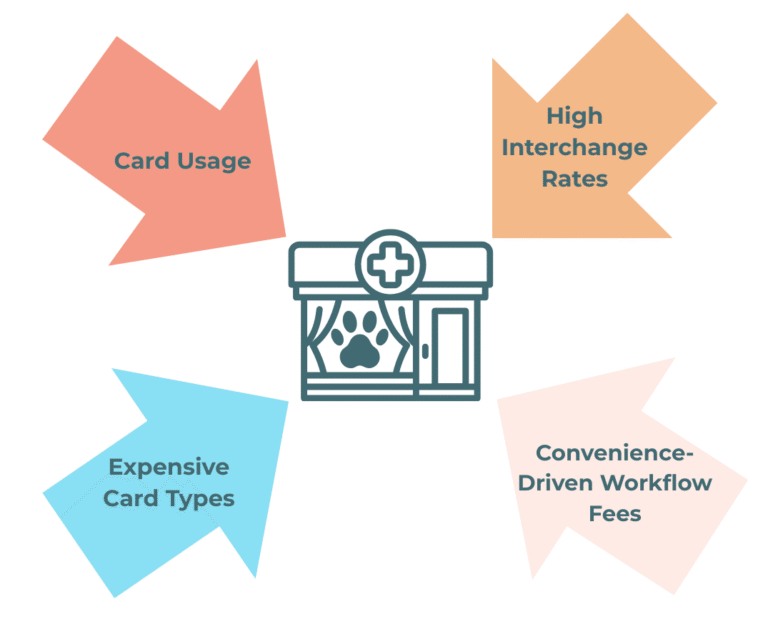
As those costs continue to rise, practices increasingly need systems created specifically around veterinary workflows.
What Veterinary Payment Integration Actually Means
A big area of confusion for veterinary clinics is payment integration. For many practices, “integration” simply means the payment terminal communicates with the practice management software, but the structure behind that connection matters significantly.
Many embedded payment systems are tied to exclusive revenue-share agreements inside veterinary software platforms. This can limit pricing flexibility and lock clinics into a single provider.

Paylow Pro approached the problem differently.
Paylow Pro’s system functions as a central payment platform that integrates into veterinary software workflows without embedding and forcing practices into a locked ecosystem. The workflow remains familiar:
- Totals pull directly from the practice management software.
- Dual pricing calculations happen automatically.
- Payments process through the terminal.
- Approval posts back into the software instantly.
Veterinary staff can maintain operational efficiency while gaining more flexibility around technology.
Support and Training Matter More Than Most Practices Expect
Implementing a new payment processing system affects the entire veterinary team. When there’s no support, staff get understandably frustrated.
Paylow Pro emphasizes a white-glove support approach that includes dedicated contacts, on-site installs and training, and workflow support during implementation.
This support has played a major role in successful adoption across Vetecelerator member clinics. Even practices that initially approached dual pricing cautiously have seen strong results once implementation and staff education were in place.
Transparency Builds Trust in Veterinary Payment Processing
Another major frustration for veterinary clinics is limited visibility into their payment data. Many providers only show net deposits, making reconciliation difficult.
Paylow Pro built reporting tools that allow practices to:
- View batch reports
- Track deposits
- Monitor payment activity in one interface

Having transparency improves financial clarity and reduces operational friction. Ultimately, that is what modern veterinary payment systems should do: simplify the business side of the practice.
Get Operational Systems that Work
This conversation highlights a larger trend across veterinary medicine: operational systems matter more than ever. As costs rise and client expectations change, veterinary practices are reevaluating everything from staffing and workflows to payment processing infrastructure.
At Vetcelerator, we see payment systems as part of a broader operational strategy. Profitability is not driven by one large decision alone, but rather it comes from improving the systems that impact the practice every single day.
When veterinary clinics reduce unnecessary expenses and improve workflow efficiency, they position themselves for stronger long-term growth. Members of Vetcelerator’s GPO save on vetted partners like Paylow Pro. Choose to grow with Vetcelerator!