

Veterinary practices compete locally. Most of your appointments come from the same nearby neighborhoods, month after month. That’s why the smartest marketing plans start with a simple question: which veterinary advertising channels fit how pet owners actually choose a clinic.
At Vetcelerator, we believe every business problem is a marketing problem. Because marketing is how your clinic shows up, builds trust, and turns interest into booked visits.
If you want a simple framework for making those choices, we use the 7 Ms of Marketing. Tie each “M” to a decision, then build your channel mix around it:
- Markets: Who are we trying to reach locally?
- Mission: What is the single outcome we want next?
- Message Content: What do they need to hear to take the next step?
- Media Strategy: Where will we reach them?
- Message Design: What format will be easiest to process and act on?
- Money: What will it cost to hit the mission?
- Measurement: How will we know it worked
This post breaks down the three core veterinary media strategy you can use to grow, plus a practical way to decide what to lean on first.
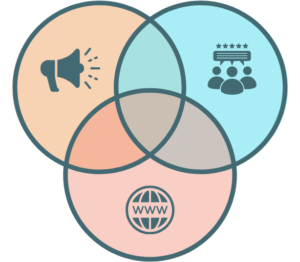
The 3 Veterinary Advertising Channels
1) Owned Media

Examples for veterinary practices:
- Your website and service pages
- Your Google Business Profile content and photos
- Your email and SMS lists
- Your social profiles and in-clinic materials
Owned media is where people go to confirm they can trust you. It’s also where “clicks” either turn into calls or die quietly.
2) Paid Media

Paid media is where you pay for reach.
Examples:
- Google Search ads (high intent, “vet near me”)
- Paid social for awareness or promos
- Local sponsorships and community placements
- Direct mail in a tight radius
Paid channels are powerful when you need predictable volume and faster momentum.
3) Earned Media

Earned media is what your community says about you. It’s trust you’ve earned, then someone else repeats it.
Examples:
- Reviews and review velocity
- Referrals from clients and local partners
- Word of mouth in neighborhood groups
- Mentions in community pages and local press
Earned media compounds. It takes time, but it lowers your cost to grow.
How to Choose Veterinary Advertising Channels
The mistake most practices make is picking channels based on what a vendor sells, not what the clinic needs next. Before you choose channels, pick one goal for the next 60 to 90 days:
Goal A: Awareness
More local pet owners know you exist and remember you when they need care.
Goal B: Choice
More pet owners choose you, book, show up, and accept care.
Now match the channel mix to the goal.
If Your Goal is Awareness

Lead with:
- Paid media for reach in your radius
- Owned media that makes it easy to understand location, services, and booking
- Earned media systems that steadily grow reviews
A clinic can have great care and still be invisible. Paid channels fix visibility fast, but only if your owned channels close the loop.
If Your Goal is Choice
Lead with:
- Owned media upgrades (speed, clarity, service pages, booking flow)
- Earned media (reviews, proof, community credibility)
- Paid media that targets high-intent services, not broad messaging
When the goal is choice, your website, reviews, and phone flow do most of the heavy lifting.

How to Pressure Test Any Channel
Ask this before spending time or money:
- Can a pet owner find you easily? (search, maps, social)
- Can they trust you quickly? (proof, reviews, team, standards)
- Can they book with low friction? (click to call, forms, online booking)
- Can your team convert demand? (answer rate, follow-up, reminders)
If any of those steps are weak, throwing more budget at paid channels will feel disappointing.
The Best Clinics Use All Three Channels, on Purpose
Most practices benefit from all three veterinary advertising channels, but not equally at all times. A thoughtful plan lets content travel across channels. A strong educational post can live on your website, get repurposed into social content, and become a paid campaign in your local market.
Over time, the payoff is real: paid media brings new attention, owned media converts, earned media compounds trust, and your growth gets more efficient.
Final Thought
If you want better results from your marketing, don’t start by asking “which platform”. Start by choosing the right veterinary advertising channels for your goal, then build a simple system your team can actually run.
If you want help aligning your channels across website, ads, social, and cost savings, explore Vetcelerator membership and see how the pieces work together.