


Guidance for Veterinarians Looking to Open Their Own Practice
This article is part of Vetcelerator’s interview series for veterinarians and pet care professionals that want to start their own practice. If you are interested in veterinary practice ownership, read our other interviews in this series.
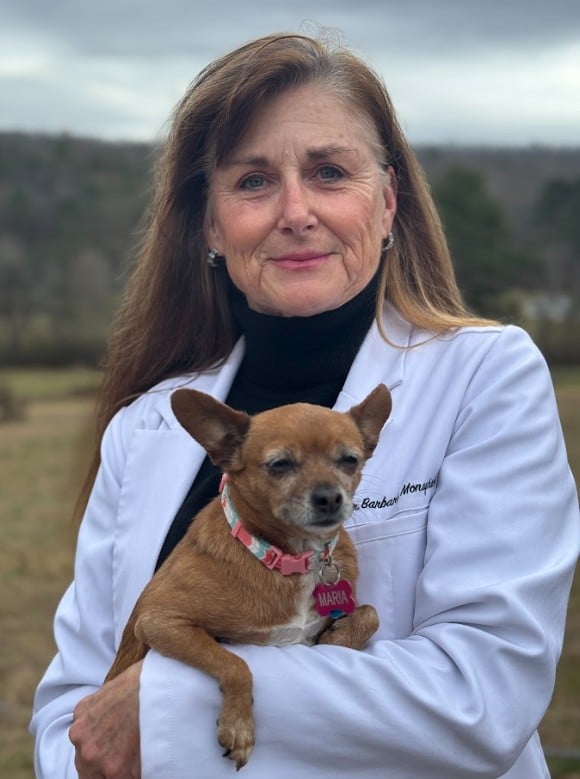
A Conversation with Dr. Barbara Monaghan, The New Kelley Animal Hospital
For many veterinarians, the path to ownership is not linear. It includes building, selling, learning, and sometimes coming back with a clearer vision. In this conversation with Vetcelerator, Dr. Barbara Monaghan from Birmingham, Alabama shares her journey of independent veterinary practice ownership through owning multiple clinics, selling to corporate, and ultimately reopening her clinic in 2026.
To understand what drives that decision, let’s start with why ownership matters in the first place.
Why Veterinary Practice Ownership Still Matters
Ownership was never a question for Dr. Monaghan. It was always the goal.
“I never thought of working for anyone but myself or with partners.”
From veterinary school onward, she knew she wanted to build and run her own practice. Over time, she did exactly that: purchasing her first clinic in 1998, expanding into two more locations, and building a career in the veterinary field.
Veterinary medicine had professional opportunity, but more importantly, ownership allowed her to shape how care was delivered.
The desire for control and autonomy is a common thread among veterinarians. But for many, the real clarity comes after experiencing the alternative.
What Corporate Veterinary Medicine Taught Her
After years of independent veterinary clinic ownership, Dr. Monaghan sold her first practice to a corporate group, only maintaining ownership of the property. She retired for a few months but soon started doing relief work.
Like many veterinarians, she gained firsthand experience inside a larger system: one with more structure, oversight, and standardization.
Over time, she realized it wasn’t the right fit.
Operating within a corporate environment limited her ability to make decisions about patient care and pricing. What she valued most about ownership (flexibility and autonomy) was no longer within her control.
Why She Reopened Her Veterinary Clinic in 2026
Relief work reconnected Dr. Monaghan with what she enjoyed most: practicing veterinary medicine.
“I really loved being back in veterinary medicine and realized I loved being a veterinarian and I wanted to continue being a veterinarian, but I didn’t want to be a veterinarian in a corporation.”
At the same time, a gap emerged in her local community. The corporate group that acquired her original clinic eventually closed it, leaving pet owners without a nearby veterinary provider. When the opportunity arose to reopen the practice, the decision became clear.
She returned to rebuild The New Kelly Animal Hospital as something aligned with her values.
Rebuilding a Veterinary Practice Around Patients and People
With years of experience across independent and corporate settings, Dr. Monaghan approached this new chapter in independent veterinary practice ownership with a refined philosophy.
“Our mission is that this is a client- and employee-centric practice.”
This means:
- Prioritizing accessibility and affordability for clients
- Involving staff in decision-making
- Delivering quality veterinary medicine without unnecessary cost inflation
These decisions are intentional. Pricing, service structure, and culture are all aligned with the type of practice she believes veterinary medicine should support.
Clarity of vision, however, didn’t come without lessons learned along the way.
Lessons Learned from Selling a Veterinary Clinic
Going through the process of selling to a corporate entity gave Dr. Monaghan valuable insight, particularly in two areas.
1. Reinvest in Your Veterinary Practice
A practice’s long-term value is directly tied to how consistently it is maintained and improved. Facilities, equipment, and operations should update over time.
2. Keep Detailed Business and Financial Records
Accurate documentation is huge, especially during a sale. Equipment purchases, financial data, and operational records all play a role in valuation and due diligence. Missing documentation can create unnecessary complications.

These lessons highlight a broader reality: independent veterinary clinic ownership is operational and financial, which means having the right support system matters.
Learning the Business Side of Veterinary Ownership
Early in her career, Dr. Monaghan navigated ownership largely on her own.
“I learned through the school of hard knocks… but I did my homework.”
She relied on research, careful decision-making, and business knowledge from her husband to guide her. While this approach worked, it came with challenges, too.
As her career progressed, she began working with advisors who helped her better understand:
- Business analytics
- Return on investment (ROI)
- The difference between cash flow and profitability
That last distinction is especially important. A practice can generate strong cash flow while still underperforming financially. Understanding the difference leads to smarter, more strategic decisions. For today’s veterinarians, this highlights a key advantage: you don’t have to figure it out alone.
Planning for a Successful Veterinary Practice
Ownership of a veterinary clinic requires strategic planning. Dr. Monaghan emphasizes the importance of leveraging professionals for:
- Accounting and financial planning
- Budgeting and ROI analysis
- Market research and site selection
- Marketing and growth strategy

Equally important is differentiation. New owners should ask: What can this practice offer that others don’t? How will it stand out in the market?
Buying vs. Building a Veterinary Practice
A decision for aspiring owners is whether to buy, build, or lease a veterinary practice. Dr. Monaghan’s perspective is practical.
“If I were a young veterinarian looking to get into practice ownership, I would… purchase a practice. It’s gonna cost you a lot more to build the equivalent practice.”
In many cases, buying an existing veterinary clinic offers clear advantages: lower upfront cost compared to building plus an established infrastructure and client base.
But the success of that decision depends heavily on one factor: location.

Building a veterinary clinic can be a strong option in growing markets where demand is increasing and access to care is limited. The right decision depends on:
- Market conditions
- Long-term goals
- Available opportunities
Regardless of the path, success comes down to planning and positioning. For many, though, one final concern still needs to be addressed.
Overcoming the Fear of Debt in Veterinary Ownership
Debt is one of the most often cited barriers preventing veterinarians from pursuing ownership. Dr. Monaghan’s perspective is direct.
“If you’re afraid of debt, you’ll be an associate for the rest of your life. Period.”
Financing is a fundamental part of building or acquiring a veterinary practice. When approached strategically, it becomes a tool, not a limitation.
Understanding how to manage debt, rather than avoid it, is a key step toward ownership.
Connecting Experience, Independence, and Growth
Dr. Monaghan’s journey reflects a broader truth about veterinary practice ownership: it evolves. From first-time ownership to expansion to corporate transition and back to independence, each phase brings new insight.
At Vetcelerator, we see these decisions as part of a larger system. Ownership is building a practice that aligns with your values, your community, and your long-term goals.
When experience, strategy, and the right support come together, veterinarians are positioned to build practices that succeed and endure. If you are an aspiring veterinary clinic or pet brand owner, find out how Vetcelerator can help.